-
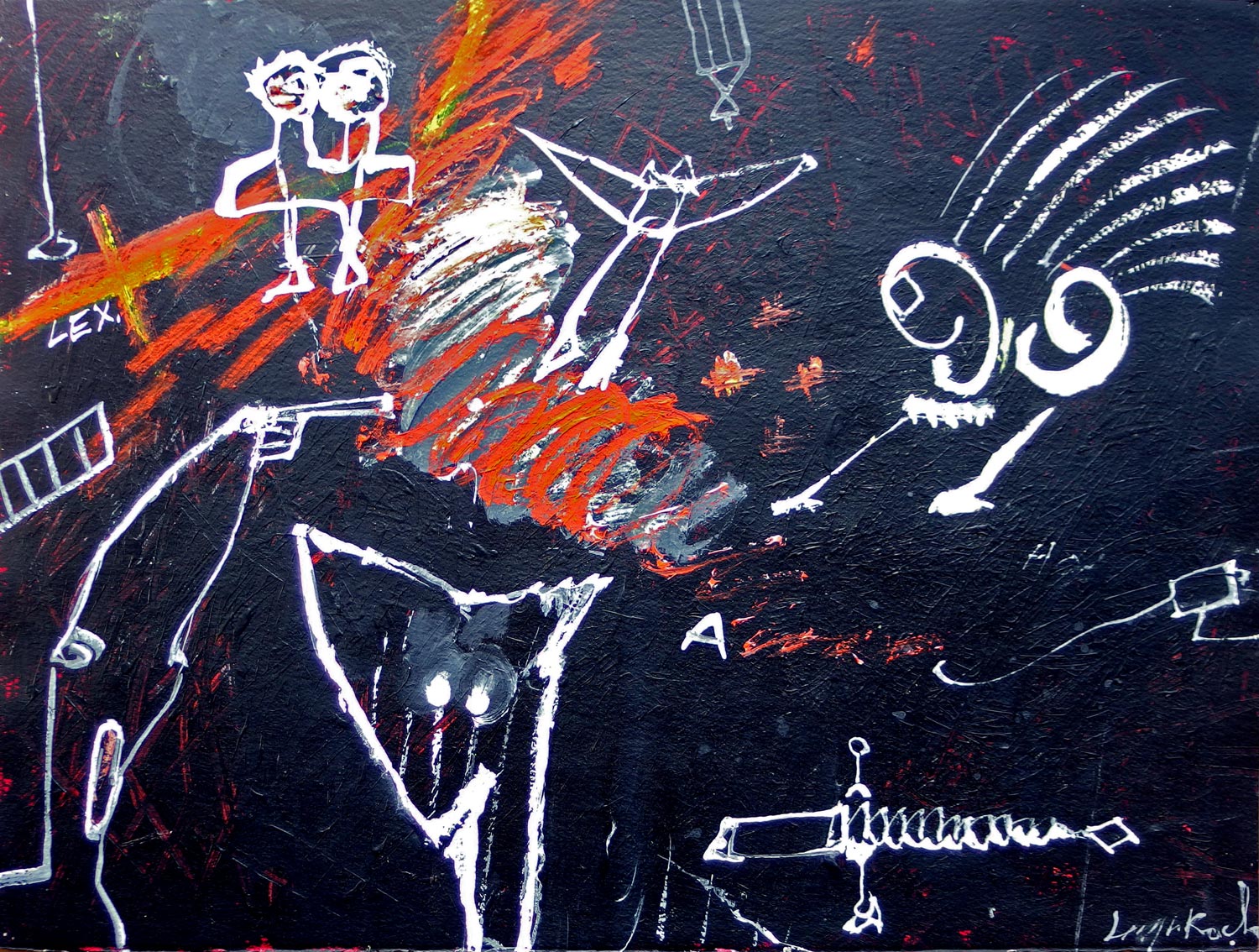
Exit Art, Consensus Exhibition 1986, Papo Colo
…a new breed of work that defines his voice in the silent medium of painting for the American and French culture to absorb.
-
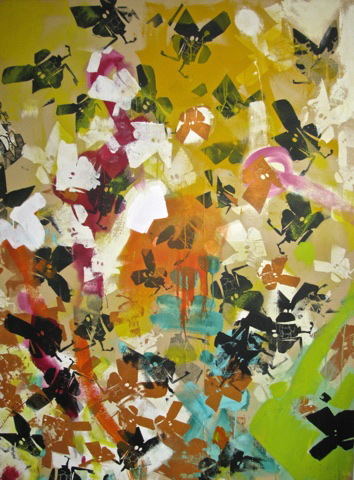
Art News 1996
Back in the subversive 1960s, Jacques Roch drew satirical comic strips for underground newspapers in Paris. A vein of dark humour still runs through his latest work - paintings that can best be described as comical-lyrical, or lyrical-comical.
-
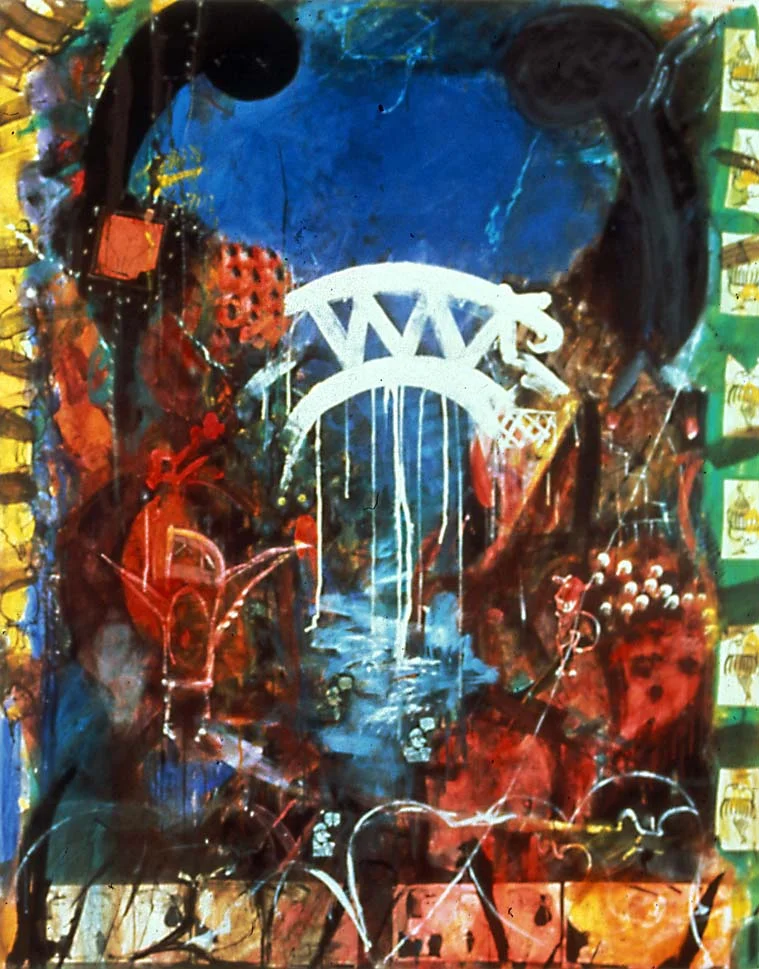
After the Deluge - Essays on Art in the Nineties, Robert Morgan
Roch is an original in spite of his obvious link to his Surrealist past. He is an original at the demise of postmodernism’s denial of originality.
-
New York Times, 1999
JACQUES ROCH sometimes has the sense that he is back in the Paris of the late 50's, once again living in a neighborhood with slant-roofed garrets and bustling street life. But this is no deja vu. Mr. Roch, ponytailed at 60, lives in a loft in Williamsburg, Brooklyn. It is a fourth-floor walkup -- ''The freight elevator, it is long kaput,'' he says in a French-tinted lilt -- with pulleys still bolted to the loft's century-old corrugated tin ceilings. Leaning against the walls of the long-defunct factory stand 12-foot-high paintings by Mr. Roch in what he describes as his ''comic-style, dark humor.''For a man like me,'' he says of living in Williamsburg, ''it has to do with Paris in the old days, a kind of nostalgic feeling from when I was one of all the young artists in Paris.''
-
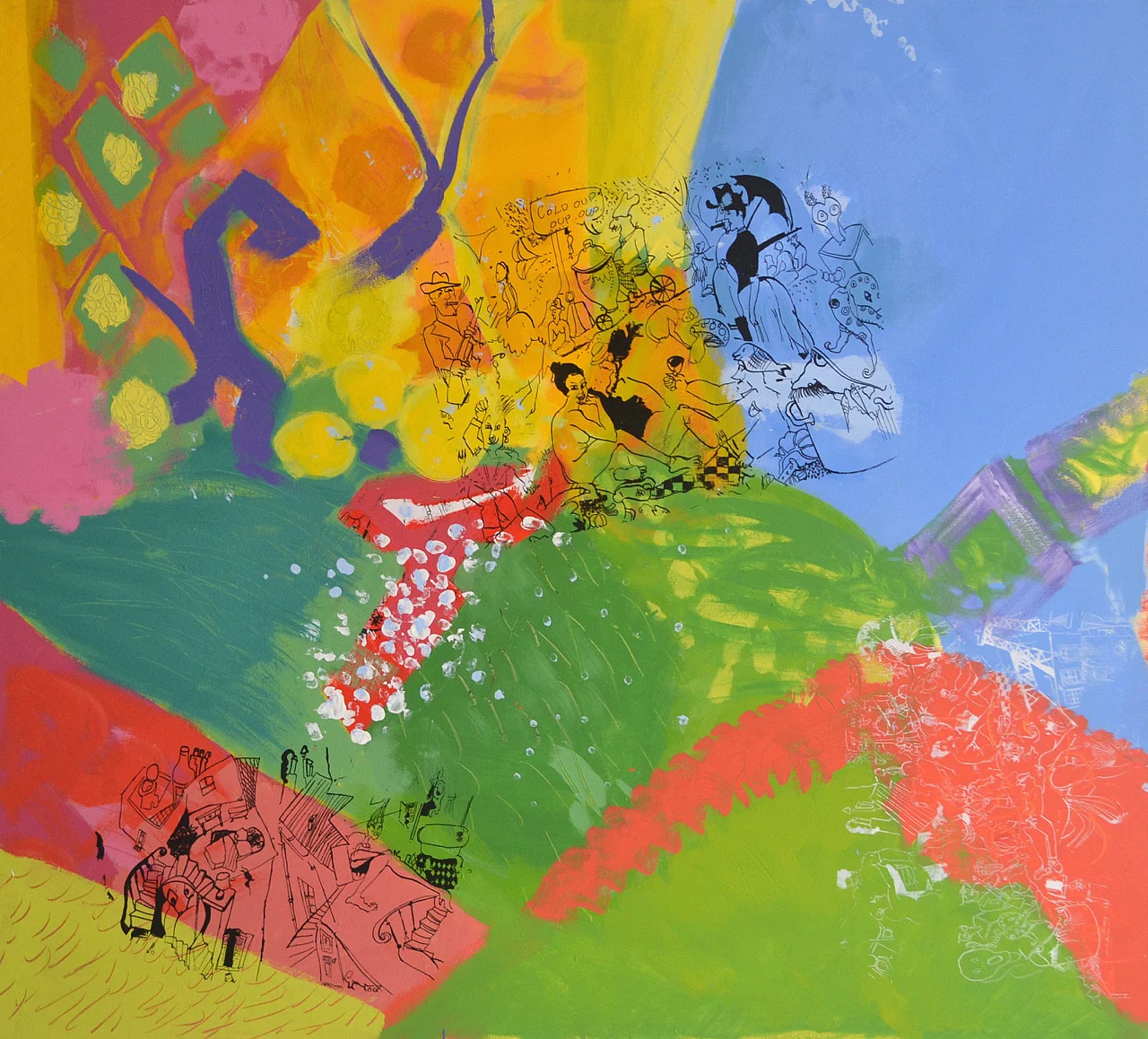
Art in America 2008, Denise Carvalho
Roch creates a tension between modernism and postmodernism though his appropriation of the iconic nude, his use of silkscreen and hit titular appropriation of Manet’s masterpiece.
-
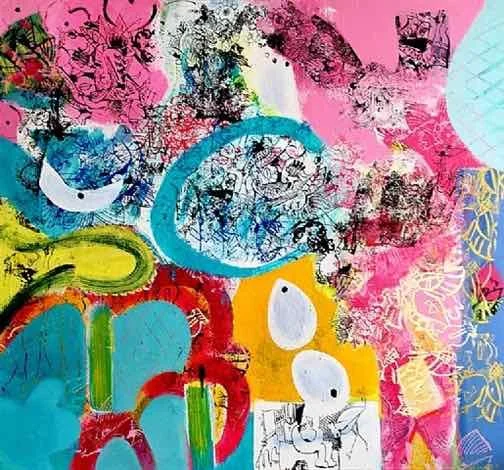
WhiteHot Magazine, Robert C. Morgan 2013
The Kiss and the Castle is both an exhibition and a tale from some lost fairyland, pushed asunder after Roch’s Parisian debacle. These paintings expose an interior sanctuary, where darkness still produces light.
-
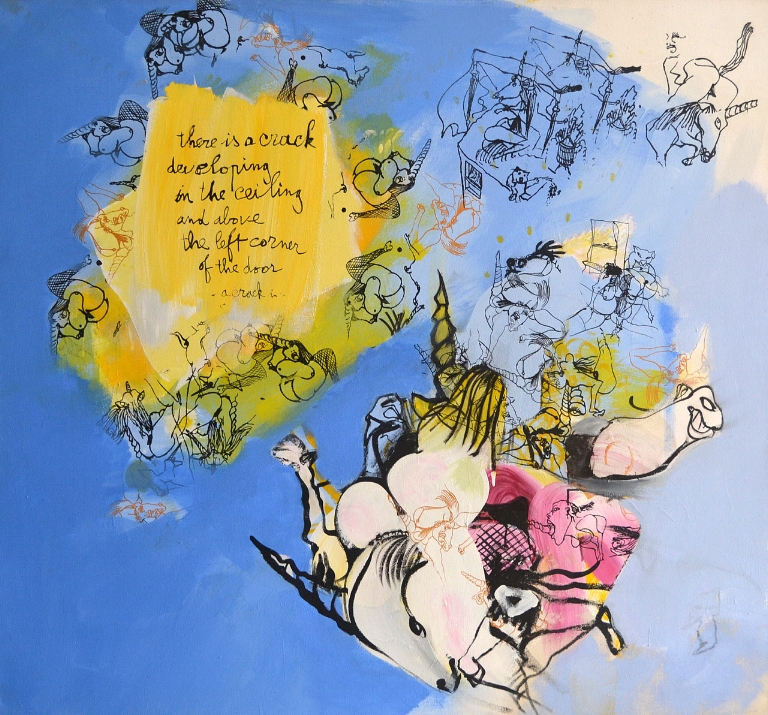
The Dream of the Unicorn, Dominique Nahas
The singularity of Jacques Roch’s discursive and scuttling space, the ribald use of color and endlessly probing self-analysis that we see in his works are vessels (perhaps self-consciously leaking bateaux-ivres) that allow the artist to float a spray of journalistic accounts - minute impressions, sensations, dreams, recollections, annotations that seem to drizzle into his consciousness, captured as one would a rainbow in a jar. -
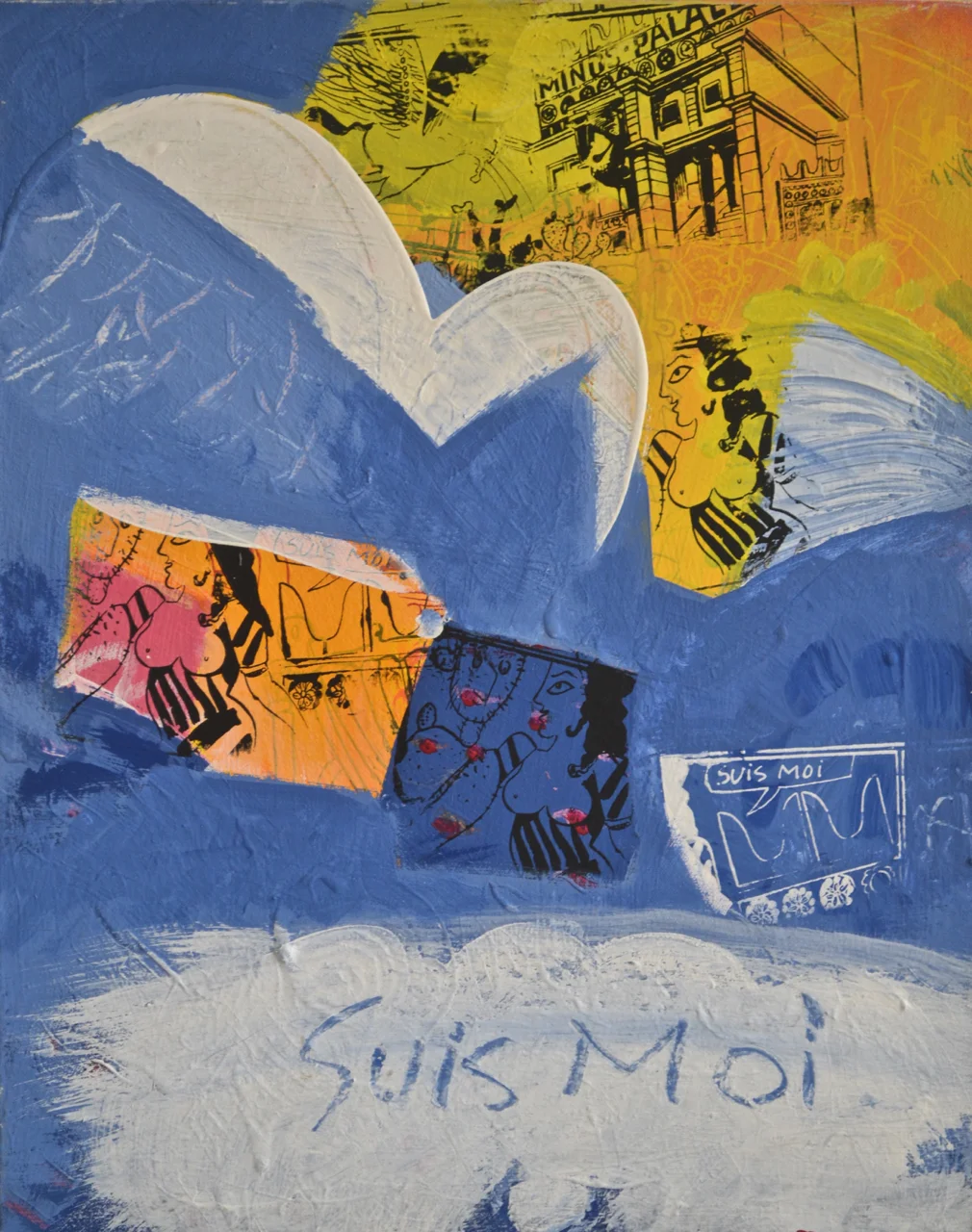
Dream of Flying
Jacques Roch’s most recent paintings explore the contingency of time/space relationships in the poetics of visual language. His sense of time is not set by a syncopated repetition or by any allusion to order and symmetry, but by primordial rhythms, variations, and interruptions. In his work, space escapes. It rejects mimetic three-dimensionality grounded by a common axis, and fully embraces the state of vertigo. These are land-escapes or interior-escapes of open color matter. Through a bird’s eye view, the viewer becomes the bird. Jacques’s familiar anthropomorphic tropes line up in a procession traversing his world of color fields, reconnecting with a world of dream or a dream world.
-
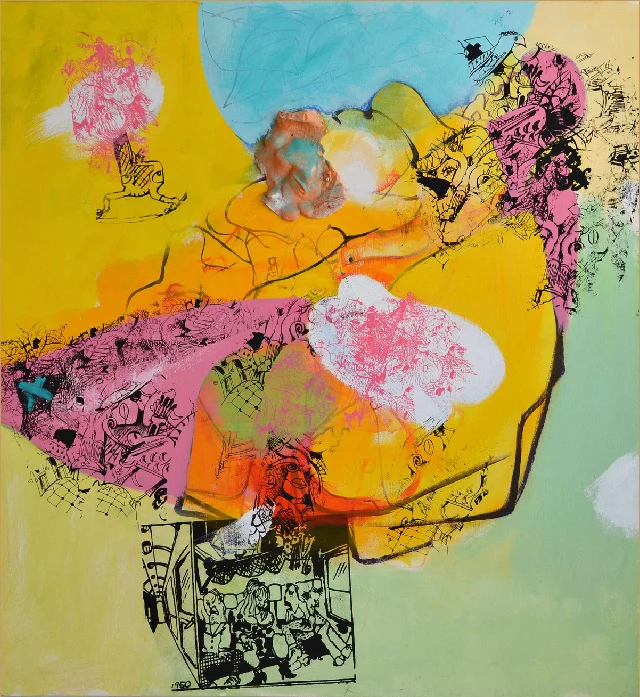
Exhibition of Recent Drawings, Seattle
The drawings have a disruptive presence and are a prominent layer in Roch’s paintings as well. But his use of color mitigates their muted screams or chuckled laughter and introduces light and space that extend the dream into a revelation of cherished memory.here
-
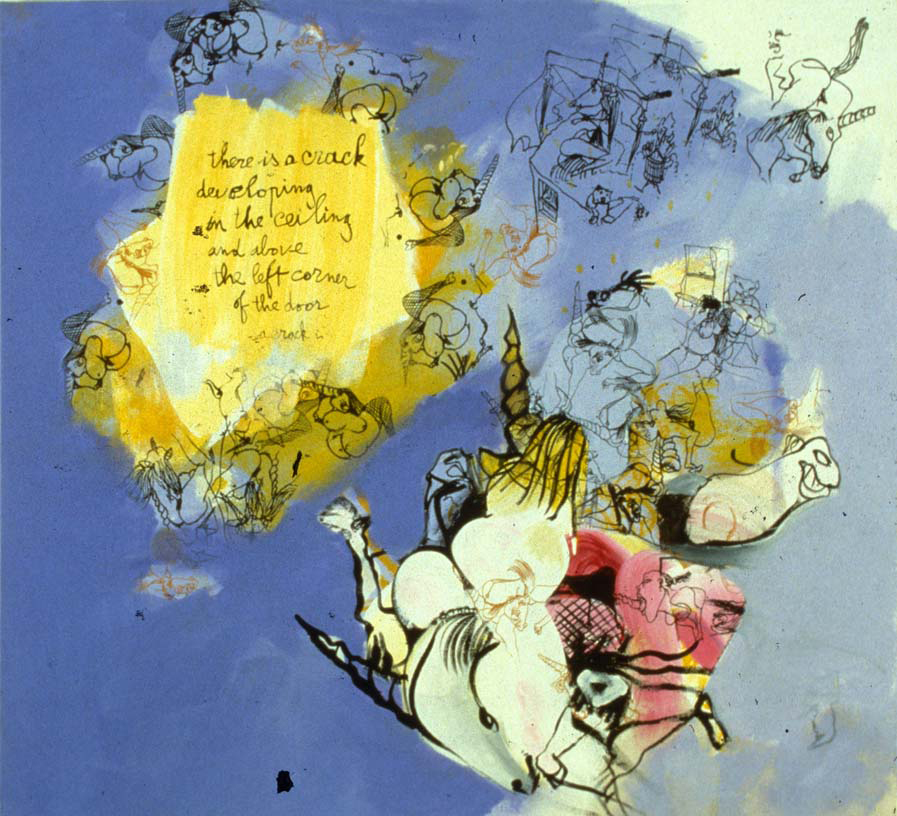
The Dream of the Unicorn, D Nahas
Jacques Roch has that mixture of frenzy and delight in his paintings which entices and charms us with its surfeit of jitteriness and pliability where the sounds of smoothness and scratchiness are sweetly insistent.
-
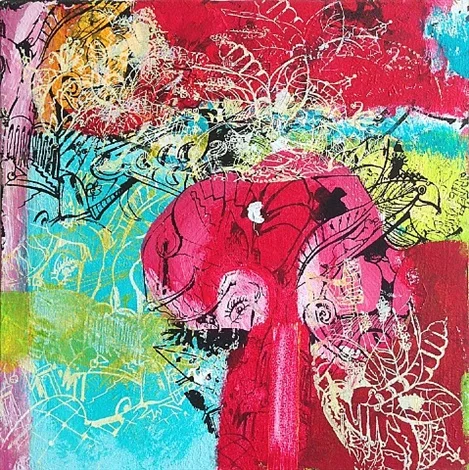
Love and Anguish in Jacques Roch’s “The Kiss and the Castle”, Dominique Nahas 2013
With the French-born artist now approaching his mid-seventies, Jacques Roch’s paintings have never been more wise, more limber, more animated and more manically sensual.
-
New List IteSymbolic Surface, Klarfeld Perry Gallery NYC, curated by Robert Morgan, 2004m
At a moment when academicians are shuffling art into the oblivion of “visual culture”, the art of Jacques Roch constitutes an important oppositional statement, a necessary aesthetic lightness. it is important for this, if for no other reason.n goes here